A local response to a changing coverage landscape
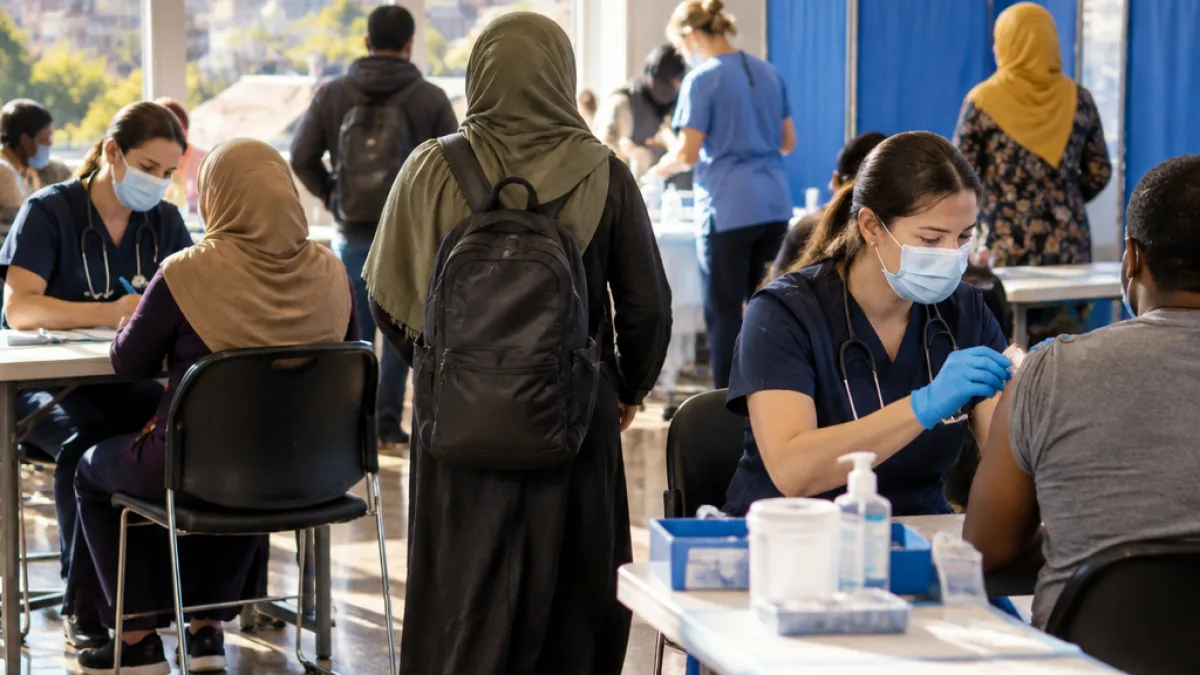
Refugees without health insurance received medical services Saturday at a free clinic in Providence organized by the Refugee Dream Center and Brown University Health. The event brought physicians, fellows and community volunteers together to provide care at a time when federal changes have narrowed Medicaid eligibility for some Rhode Island adults who are not United States citizens.
The clinic offered several forms of assistance, including routine checkups, vaccinations and mental health support. For people who have recently lost coverage, organizers said the event created an opportunity to seek care without the financial barrier of an insurance bill. The effort also placed volunteers and health professionals in a setting focused specifically on refugees who may otherwise have difficulty finding or paying for services.
Coverage losses affect some adult refugees
In Rhode Island, many adult refugees who do not have green cards are no longer eligible for Medicaid as a result of the federal changes. The eligibility shift does not apply equally to everyone. Children younger than 19 remain among those who can still qualify, according to the information provided about the change, while the clinic was aimed at refugees who are currently uninsured.
Dagna Artola, who attended the clinic, said she lost her health insurance on Oct. 1. Her experience illustrates how a change in eligibility can quickly become a practical concern for a Providence household: medical visits, preventive care, vaccinations and emotional support may all become harder to obtain when coverage ends.
“It was definitely a good opportunity to come in and receive any assistance that we could get,” Dagna Artola told NBC 10.
Services available through the clinic
The organizers described the event as a direct service response rather than a one-time outreach effort. The clinic's offerings included:
- Health checkups
- Vaccinations
- Mental health support
- Volunteer assistance from physicians, fellows and community members
Those services address both immediate and preventive needs. A checkup can give an uninsured patient a chance to discuss a health concern, while vaccines and mental health support provide forms of care that can be postponed when families are navigating a loss of coverage. The clinic also reflects the role that community organizations and health institutions can play when eligibility rules leave some residents outside the insurance system.
Organizers plan additional dates
The Refugee Dream Center and Brown University Health expect to hold clinics twice a month, indicating that organizers anticipate continued demand among uninsured refugees. The next clinic is scheduled for Dec. 11 at the Dorcas International Institute of Rhode Island. The announcement gives people affected by the Medicaid changes another identified date and location at which to seek assistance.
| Clinic information | Details |
|---|---|
| Organizers | Refugee Dream Center and Brown University Health |
| Services | Checkups, vaccines and mental health support |
| Frequency expected | Twice a month |
| Next scheduled clinic | Dec. 11, Dorcas International Institute of Rhode Island |
For Providence, the clinics offer a local point of access during a period of uncertainty for refugees whose insurance status has changed. The Saturday event did not alter the underlying Medicaid rules, but it provided a way for volunteers and medical professionals to respond to the immediate consequences. With additional clinics planned, the partnership is positioning itself as a continuing source of care for residents who may no longer be able to rely on Medicaid coverage.