A campus march with a message
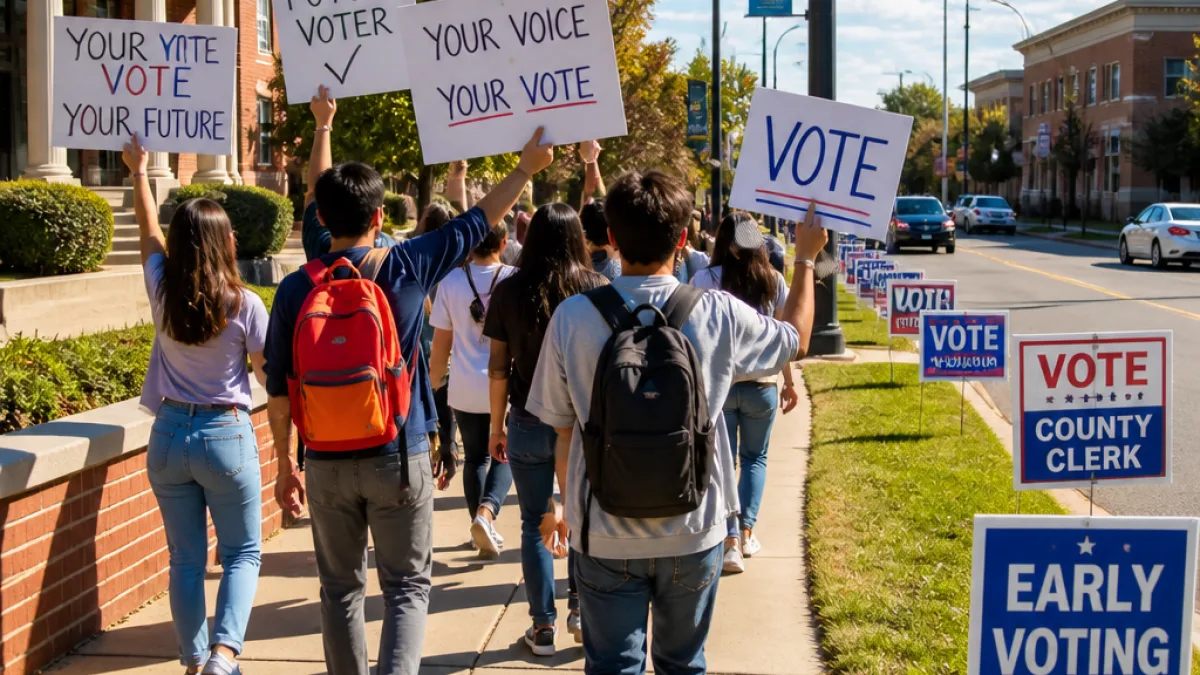
On Austin Peay State University’s campus, a routine walk toward the ballot box became a visible statement about who belongs in Clarksville’s civic life. About 20 students gathered outside Clement Auditorium on Oct. 23, carrying handmade signs, using megaphones and calling on their peers to vote as the Nov. 3 election approached.
The marchers moved through the University Center before beginning the more than one-mile route to the Montgomery County Election Commission. Some students intended to cast ballots themselves. Others joined to support friends who were voting. Their signs offered short, direct appeals: “If you don’t vote, don’t complain,” “Vote the change you want to see in the world” and “Your vote matters.”
Along the way, the group asked fellow students whether they were registered and whether they had voted. The effort unfolded amid the familiar signs of an election season across Clarksville, including campaign messages in yards, online reminders, photographs of “I voted” stickers and conversations about when residents planned to visit the polls. On College Street, drivers answered the students with honks and cheers, while some people passing by turned away.
“As a 71-year-old mother and grandmother, it is so encouraging to see students out here.”
That encouragement came from Clarksville voter Rose Hall-Valentine, an Austin Peay alum who stopped the group at the election office. Hall-Valentine said she had been urging students and younger residents to participate. She praised the marchers for spending a Friday taking part in the election rather than choosing other activities.
Older residents urge younger voters forward
The students’ visibility also drew recognition from Loretta Morris, president of the Clarksville-Montgomery County NAACP. Morris applauded the group and told the students that younger people should encourage their friends and demonstrate the importance of showing up. Her message placed the campus event within a larger community concern: sustaining participation across generations and making voting a shared responsibility rather than an occasional individual task.
“We need younger people out here encouraging your friends, showing us the way.”
The march offered several ways for students to take part, even for those who were not casting a ballot that day:
- Students who planned to vote traveled together to the Montgomery County Election Commission.
- Friends and classmates joined the walk to support peers taking part in the election.
- Student organizers used signs, chants and direct questions to prompt conversations about registration and voting.
Participation made public
The event’s significance was less about the distance traveled than about making participation unmistakable. By moving together from campus to the election office, the students turned voting into a communal activity that could be seen and heard beyond the polling place. Their chants included “Go vote” and “Love not hate makes America great,” while the signs framed voting as both a personal choice and a way to influence the direction of public life.
For Clarksville, where Austin Peay brings a large student population into the center of the community, the march also showed how campus activity can spill into the city around it. Students walked on public streets, interacted with drivers and passersby, and met longtime residents at the election office. The exchanges connected people at different stages of life around a single civic act.
| Detail | Information |
|---|---|
| March date | Oct. 23 |
| Group size | About 20 students |
| Starting point | Outside Clement Auditorium at Austin Peay |
| Destination | Montgomery County Election Commission |
| Election approaching | Nov. 3 |
With Election Day nearing, the students’ approach was straightforward: encourage one another, make the trip together and remind the broader community that young voters have a place in Clarksville’s decisions. The honks, cheers and supportive words along the route underscored the public nature of that choice. Whether residents were casting ballots, walking beside a friend or urging someone else to participate, the day showed how a local election message can travel from a college campus into the wider city.