
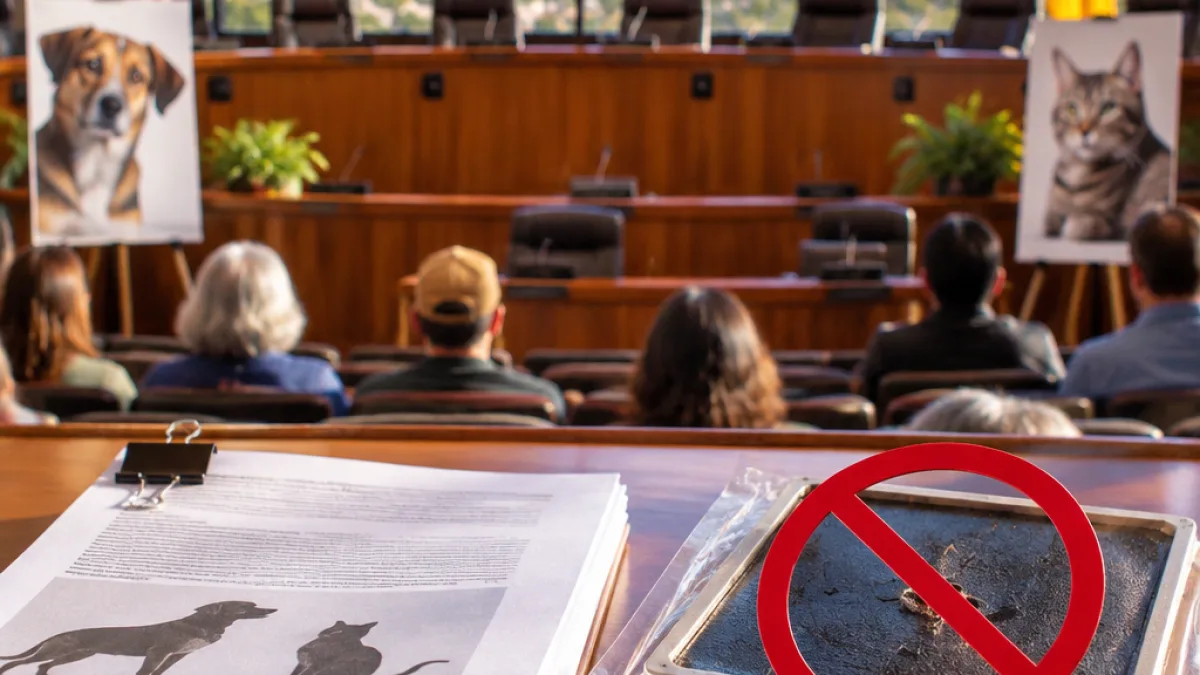
A citywide prohibition
Albuquerque’s City Council voted unanimously to prohibit the use and sale of glue traps within the city, making the measure one of the clearest recent statements of the city’s animal-welfare policy. Ordinance O-26-62, co-sponsored by District 7 Councilor Tammy Fiebelkorn and District 1 Councilor Stephanie Telles, amends Albuquerque’s Humane and Ethical Animal Rules and Treatment, or HEART, Ordinance.
The action also places limits on the use of insect adhesive traps at city facilities. Under the amended municipal rules, the prohibited devices are treated as acts of animal cruelty. The city said Albuquerque is now the largest U.S. city to pass an adhesive-trap ban, placing a local policy decision within a broader national and international debate over how communities manage pests while limiting unnecessary suffering.
Animal suffering and public health
Glue traps are designed to immobilize animals rather than kill them immediately. The city said animals caught on the adhesive surfaces can include companion animals, wildlife and birds, and may remain trapped for hours or days. During that time, they can die from exhaustion or dehydration, or suffer self-inflicted injuries while attempting to escape.
The issue is not limited to animal welfare. According to the city, struggling animals may urinate and defecate repeatedly while trapped, creating conditions that can increase the risk of zoonotic disease transmission, including Hantavirus. The Centers for Disease Control and Prevention and the New Mexico Department of Health’s Infectious Disease Epidemiology Bureau explicitly recommend against using glue traps, the city said.
“Glue traps are cruel, and cruelty is not welcome in Albuquerque,” Councilor Tammy Fiebelkorn said.
What the ordinance changes
Fiebelkorn described the measure as both a public-health decision and an effort to prevent the killing of animals through what she called an unnecessary method of pest control. She said Albuquerque’s action should encourage other cities and countries to adopt similar restrictions.
- Use: Glue traps are prohibited within Albuquerque.
- Sales: The ordinance prohibits the sale of glue traps within the city.
- City facilities: Insect adhesive traps are subject to strict regulation at municipal facilities.
- Legal classification: Use of the prohibited devices falls under animal cruelty in municipal law.
The ordinance’s passage gives the city a unified rule rather than leaving the treatment of glue traps to separate decisions by households, businesses or facilities. It also connects everyday pest-control practices with the city’s existing framework for humane and ethical treatment of animals, a framework whose name reflects Albuquerque’s effort to place animal protection in municipal policy.
Evidence from wildlife hospitals
The city cited data collected by WILD-ONe showing that, from 2014 through 2024, members of more than 180 species were caught in glue traps and taken to wildlife hospitals for lifesaving care. That range illustrates the devices’ indiscriminate nature: They do not distinguish between the animals people intend to control and other creatures that encounter the adhesive.
| Measure | Reported figure |
|---|---|
| Wildlife-hospital data period | 2014-2024 |
| Species represented | More than 180 |
| City Council vote | Unanimous |
For Albuquerque residents, the vote turns those concerns into a citywide standard. The policy treats the choice of a pest-control device as a question of both public health and humane treatment, reflecting the city’s stated commitment to preventing unnecessary pain and suffering. In a region where wildlife, companion animals and people share an increasingly close urban landscape, the ordinance places limits on a tool whose consequences can extend well beyond the target imagined by the person who sets it.