The government has unveiled new protections for motorists targeted by private car park operators, introducing guaranteed grace periods, limits on fines for minor errors and stronger remedies for drivers who face unreasonable charges. The measures were announced by the Prime Minister as part of a drive to tackle what he described as “rip‑off” parking bills from private companies.
What the new rules will deliver
The package gives motorists a statutory ability to challenge excessive charges levied by private parking firms and imposes minimum leniency for common, harmless mistakes. Key elements include a short guaranteed parking decision period and protections for drivers who experience problems beyond their control.
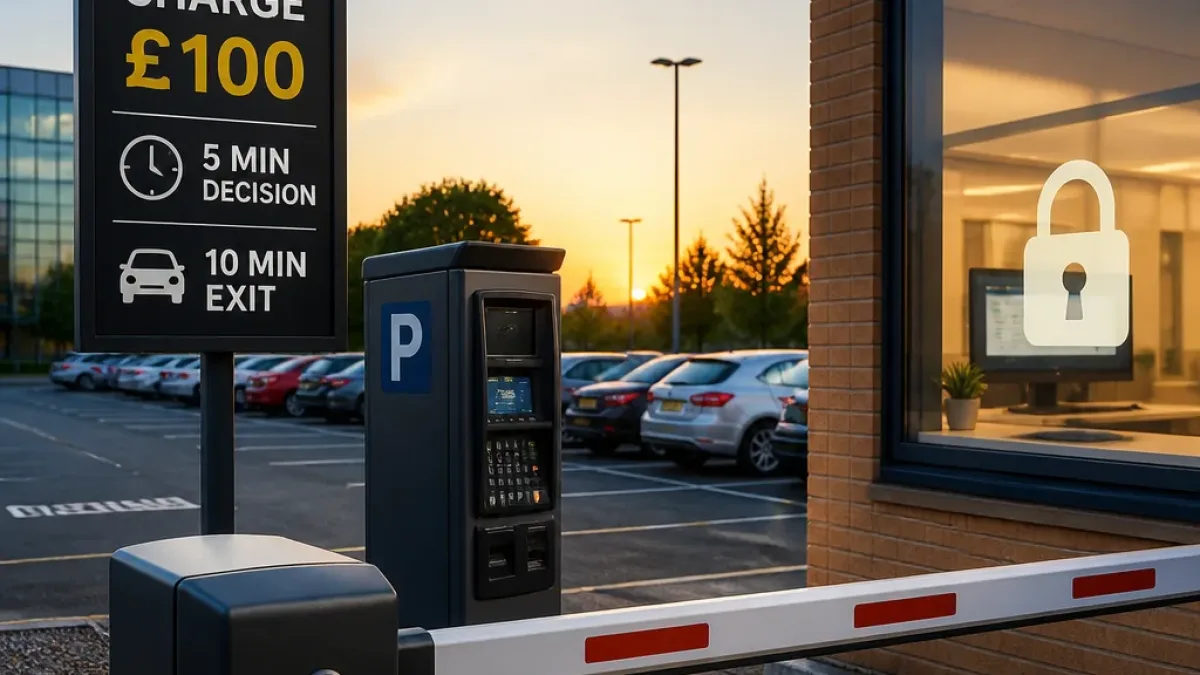
- Five minutes guaranteed to decide whether to park.
- Ten minutes allowed to leave a car park without being penalised.
- Cancellation of charges where drivers suffer incidents such as breakdowns, medical emergencies or when ticket machines are faulty.
- Cancellation for honest mistakes — for example stopping briefly to check directions.
- Maximum appeal charge of £20 for slip-ups such as entering the wrong vehicle registration or forgetting a parking permit.
- Freeze on the maximum private parking charge at £100, maintaining the current limit in the industry Code of Practice.
“Being a few minutes late back to your car or typing one digit of your numberplate wrong shouldn't end with a hefty fine landing on your doormat,” the Prime Minister said.
Enforcement and consequences for operators
Operators who do not adopt the new standards face a practical sanction: removal of access to Driver and Vehicle Licensing Agency (DVLA) data. Without that information, firms will find it much harder to pursue vehicle keepers who they say have breached parking terms.
The government said non‑compliant car park operators could therefore be effectively blocked from chasing charges through the usual vehicle‑keeper liability route, which would reduce their ability to issue large volumes of notices.
Scale of the problem
Motoring groups and consumer bodies welcomed the move, noting private operators had issued a record number of tickets in the previous year. Analysis by the RAC and Press Association of government data found:
| Statistic | Figure |
|---|---|
| Private parking tickets issued (2025/26) | 17 million |
| Year‑on‑year increase | 17% |
Each private parking charge can be levied at up to £100, and the government said the changes would protect motorists from what it called unfair practices by some firms. The RAC described the rules as a defence against “poor practices” among private parking companies.
Practical effect for motorists
Under the new framework, motorists who make genuine mistakes — such as keying in an incorrect digit of their registration, or being detained by an unexpected mechanical problem — will have more scope to have charges cancelled or reduced on appeal. In specific cases the new rules set an explicit ceiling of £20 on appeal fees for such slip‑ups.
Ministers said the reforms respond to repeated complaints from drivers who felt penalised for minor or unavoidable failings. They pointed to instances where private firms pursued large claims through the courts, leaving road users facing intimidating bills that in some cases ran into thousands of pounds before being dropped.
Next steps and implications
The changes are designed to strengthen the existing private parking Code of Practice by giving the government teeth to enforce fairer behaviour. If successfully implemented, the measures should reduce the number of high‑value claims pursued against drivers and limit the business model of operators who rely on issuing large numbers of close‑to‑automatic penalties.
However, the effectiveness of the reforms will depend on how robustly access to DVLA data is revoked for non‑compliant firms and how quickly signposting and dispute processes are standardised across the sector. Motorists and campaign groups will be watching for the detail of how appeals are handled and whether the new protections are applied consistently in practice.