The virtual rehabilitation provider Carda Health has announced a formal partnership with the American College of Lifestyle Medicine (ACLM) to widen access to evidence-based lifestyle medicine and improve care for people with chronic cardiopulmonary conditions. The agreement, described as a year-round collaboration, will focus on remote cardiac and pulmonary rehabilitation, clinician education and research activity.
Virtual rehab meets lifestyle medicine
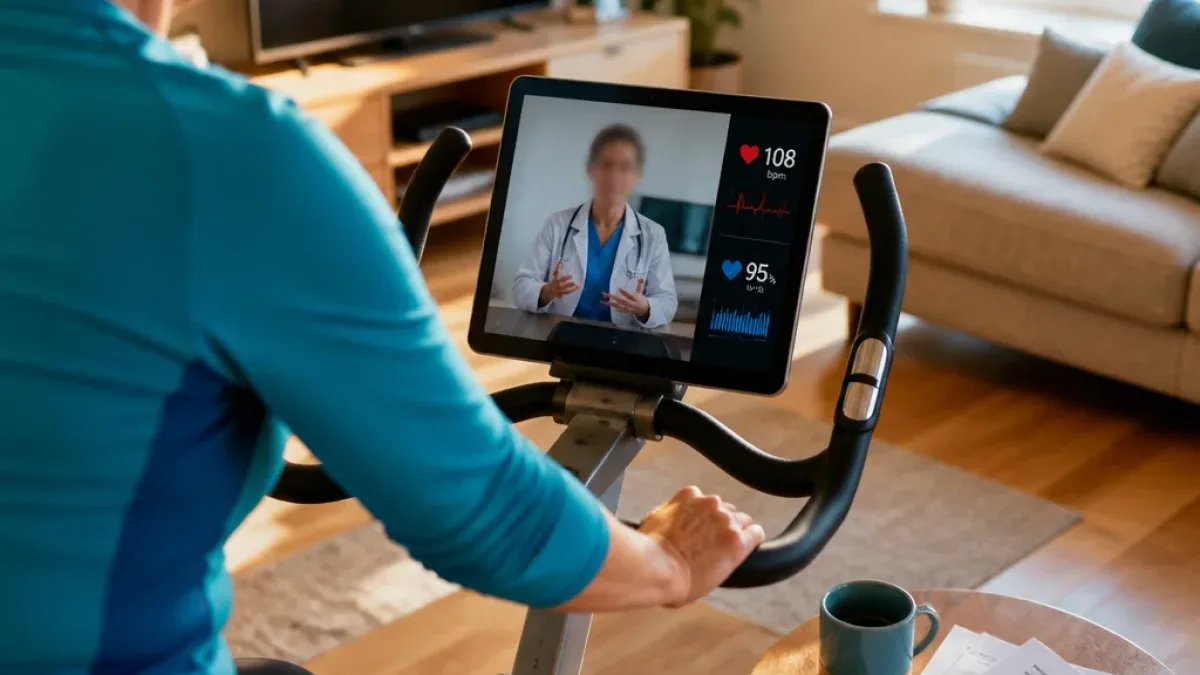
Carda, which offers structured remote programmes that combine one-on-one clinical support, live supervised exercise sessions and real-time monitoring of vital signs, says its model is intended to overcome common barriers to centre-based rehabilitation. These barriers include distance from specialist centres, transport difficulties, competing work commitments and caregiving responsibilities — factors that frequently prevent patients from starting or completing traditional rehabilitation courses.
The new arrangement will see Carda contribute educational resources, webinars, podcasts and other content to ACLM’s membership. It will also create opportunities for joint research pilots and demonstration projects aimed at evaluating and extending at-home rehabilitation services.
What the partners say
“Healthcare already knows how to treat many chronic conditions. The challenge is making proven care easier to access, complete and sustain,”
The comment came from Harry DiFrancesco, Carda’s chief executive and co‑founder, who framed the partnership as a way to bring established care pathways into more people’s homes. He highlighted ACLM’s role as a community committed to changing how chronic disease is managed.
ACLM will host the first piece of programming this autumn. On 4 November Carda will lead a webinar titled “Rehab Reimagined: Virtual Care's Impact on Access and Outcomes.” The session is supported by ACLM and will feature physicians and rehabilitation specialists including Dr Dean Ornish, Haley Uher — Carda’s head of clinical exercise physiology — and Julie Stebbins, director of outpatient cardiology services at WellStar Health System.
Practical implications for patients and clinicians
For patients, the partnership could mean more options to complete rehabilitation at home with professional supervision and biometric feedback. For clinicians and health systems, the collaboration promises additional educational material and potential research evidence to support virtual models of care.
- Access: Remote services can reduce geographic and logistical barriers to rehabilitation.
- Engagement: Live monitored exercise and one-to-one clinical input aim to improve adherence.
- Evidence: Joint research pilots are planned to assess outcomes and scalability.
Carda’s model, as described in the announcement, delivers care remotely while capturing real-time vitals during exercise sessions — a capability that may reassure clinicians used to in-person monitoring. ACLM’s involvement is intended to broaden clinician engagement and embed lifestyle-medicine principles within rehabilitation pathways.
| Aspect | Detail |
|---|---|
| Partnership type | Year-round collaboration on education, research and programming |
| First public event | Webinar on 4 November: "Rehab Reimagined" |
| Core services | Virtual cardiac and pulmonary rehabilitation with live monitoring |
Broader context
Chronic cardiovascular and pulmonary conditions remain major drivers of morbidity and healthcare utilisation. While clinical guidelines support rehabilitation and lifestyle interventions, real-world uptake is often poor. Programmes that can be delivered remotely seek to bridge that gap by combining clinical oversight with convenience.
By partnering with ACLM, Carda is aligning its digital rehabilitation offering with an organisation focused on lifestyle interventions — such as diet, physical activity, sleep and stress management — that complement traditional medical treatment. The success of the collaboration will depend on measuring outcomes in routine practice and on the willingness of clinicians and patients to adopt remote approaches as standard options.
This initiative will begin to roll out its educational component this autumn, with further research and programming scheduled under the partnership framework.