
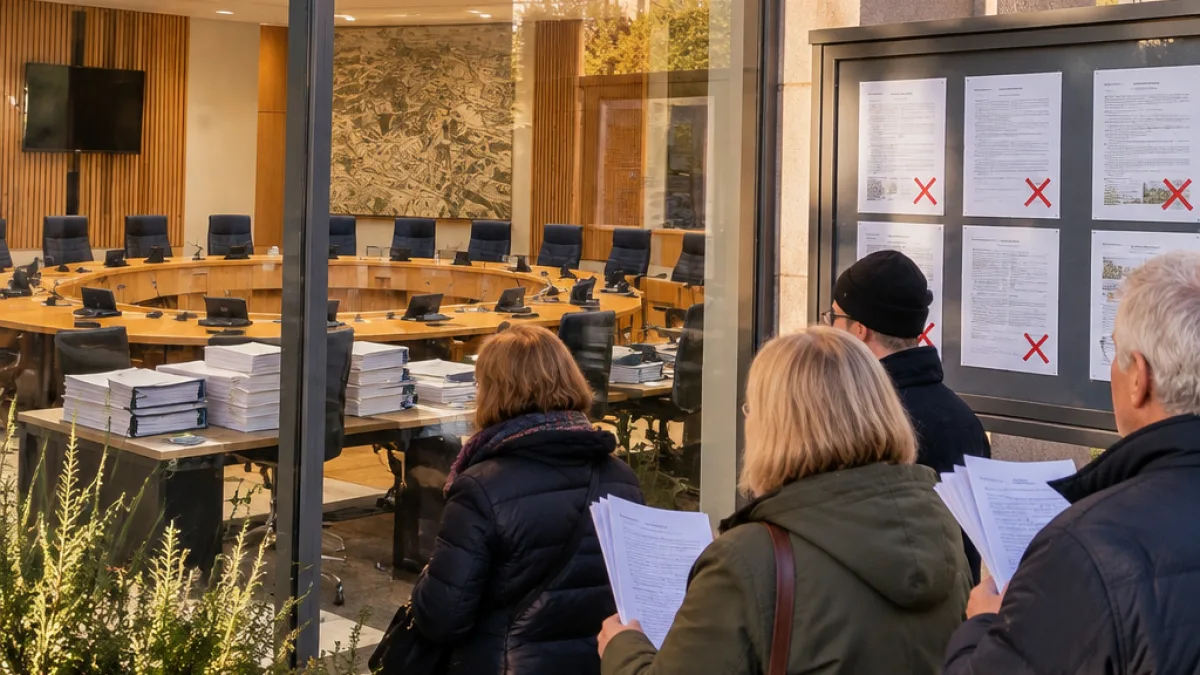
Government backs faster planning decisions
The Government has rejected a request from Derby City Council to withdraw new planning rules which local councillors say could increase complaints from residents and reduce democratic oversight.
The changes, introduced at the end of October, give planning officers a greater role in deciding which applications should be determined by officers and which should go before the council’s elected planning committee. Under the new arrangements, councillors can only consider an application when it raises a significant economic, social or environmental issue for the local area.
The final decision on whether that threshold has been met rests with a planning officer rather than an elected member. A long-standing Derby procedure allowing councillors to “call in” applications when they had concerns has also been removed.
Concerns over applications attracting objections
The changes have prompted opposition from councillors across the political divide. They have raised concerns that proposals likely to attract objections, including houses in multiple occupation and smaller developments on green or brownfield land, could be decided by officers without being discussed by the planning committee.
Derby’s cabinet member for planning, Labour councillor Shiraz Khan, wrote to the Government asking for the national arrangements to be scrapped. He argued that the main obstacle to housing growth was not the planning decision-making process but the construction industry.
“The unintended consequences of the proposed National Scheme are likely to be more complaints from disenfranchised residents which will distract planners from actual planning whilst they administer the complaints processes.”
Councillor Khan also warned that residents who felt excluded from the process could challenge the way decisions had been made. He said the Local Government Ombudsman could receive more complaints about procedure, particularly where decisions were made without a committee hearing.
Government says system will reduce delays
The Government has defended the changes as a way of speeding up the planning system and preventing relatively minor applications from being held up by political debate. The Ministry of Housing, Communities and Local Government said some applications were waiting for months for a committee place even though they could be determined quickly by a trained planning officer.
The dispute centres on the balance between faster administration and local accountability. Under the arrangements now operating in Derby, the main stages can be summarised as follows:
- Planning officers assess whether an application meets the threshold for committee consideration.
- Elected councillors can only decide applications involving a significant local economic, social or environmental issue.
- The previous ability to call in any application because of councillor concern has been removed.
- Applications considered minor may therefore be decided without a public planning committee debate.
What the decision means for Derby
For residents, the immediate practical effect is that an objection to a proposal will not automatically lead to a discussion by elected councillors. The application will first be assessed against the Government’s significance test, with the officer responsible for deciding whether the planning committee has a role.
Supporters of the new system say that approach should prevent routine cases being delayed and allow planning staff to concentrate on applications requiring wider judgement. Opponents argue that the loss of the call-in power makes it harder for councillors to represent residents where a proposal may have a strong local impact but does not meet the national threshold.
The Government’s refusal means Derby’s existing concerns will have to be pursued within the new framework. Councillors remain able to consider applications that meet the specified threshold, but the decision on access to the committee now rests with officers. The council’s warning that the system may generate more complaints has therefore not led to a change in the rules.
| Issue | Position under the new rules |
|---|---|
| Committee consideration | Limited to applications raising a significant local issue |
| Decision on the threshold | Made by a planning officer |
| Previous call-in arrangement | Removed |
| Government’s stated aim | Faster decisions on minor applications |