Congress-led panel secures majority in Kolhapur dairy federation
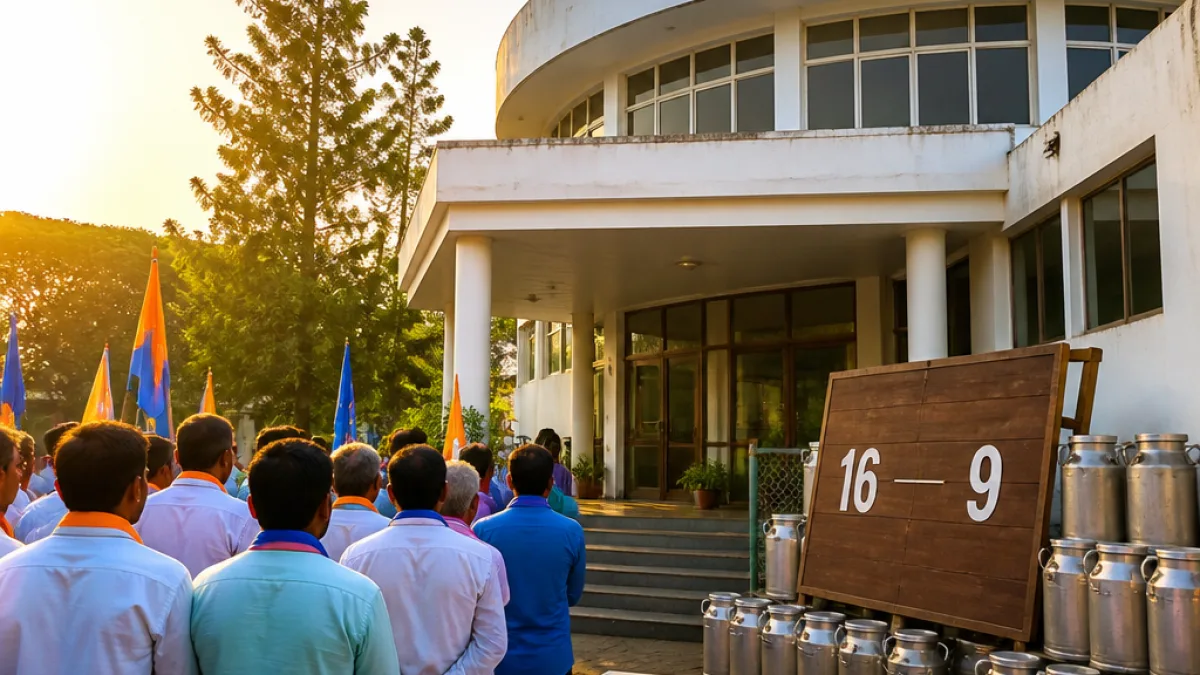
Kolhapur — The Congress-led Rajarshi Shahu Shetkari Samvichari Aghadi, headed by MLC Satej Patil, won 16 of the 25 seats in elections to the Kolhapur District Cooperative Milk Producers’ Union, popularly known as Gokul, results declared on Monday showed. The outcome hands a significant organisational and political advantage to Patil’s panel and represents a setback for the state’s ruling Mahayuti alliance.
The Mahayuti-backed Rajarshi Shahu Shetkari Vikas Aghadi won the remaining nine seats in a contest that featured 50 candidates fighting for 25 positions. Voter turnout in the cooperative poll was reported at 99.96 per cent, underscoring the high engagement of cooperative members in the district.
High-stakes contest, notable defeats
The election had turned into a prestige battle between the two panels, with leaders from both sides campaigning vigorously to secure control over one of western Maharashtra’s most influential cooperative bodies. Gokul’s board wields considerable economic clout in Kolhapur through procurement, marketing and distribution of milk and dairy products, and its leadership often translates into local political influence.
Prominent candidates who lost their bids included Navid Mushrif — the outgoing Gokul chairman and son of state minister Hasan Mushrif — along with former chairmen Arun Dongale and Vishwas Patil. Another close contest saw Shaumika Mahadik lose by a narrow margin of seven votes. Counting initially showed the Mahayuti-backed panel with a lead, but the Samvichari Aghadi gained ground as the process progressed and ultimately secured a clear majority.
- Seats contested: 25
- Total candidates: 50
- Turnout: 99.96%
| Panel | Seats won |
|---|---|
| Rajarshi Shahu Shetkari Samvichari Aghadi (Satej Patil) | 16 |
| Rajarshi Shahu Shetkari Vikas Aghadi (Mahayuti-backed) | 9 |
Implications for Kolhapur and western Maharashtra
Control of the Gokul federation is widely regarded as consequential for local politics across western Maharashtra, where cooperative institutions remain central to rural economies and leadership networks. With Patil’s panel now running the federation, political observers in Kolhapur say the result is likely to alter local power equations and affect mobilisation ahead of future elections in the region.
The victory strengthens Satej Patil’s standing within the district and the Maharashtra Congress, given Gokul’s reach among milk producers, retail networks and allied businesses. Conversely, the Mahayuti alliance has lost a key institutional foothold in Kolhapur, a development that may prompt recalibration of strategies by its leaders who had campaigned to retain the cooperative’s board.
The election featured allegations and counter-allegations between the two panels during the campaign period, as each side sought to consolidate support among cooperative members. The 16–9 verdict will shift administrative control of the federation to the Samvichari Aghadi and will determine the board that oversees procurement rates, procurement policies and other operational decisions affecting thousands of milk producers in the district.
As the new board takes charge, producers and local stakeholders will watch for decisions on pricing, milk procurement and investment in dairy infrastructure that could have immediate economic consequences for farming households in Kolhapur and neighbouring talukas.
The result also illustrates the continuing prominence of cooperative politics in regional power dynamics, where control of dairy and sugar federations has historically been a barometer of grassroots influence.