Board grants bail in Panchkula school case
The Juvenile Justice Board (JJB) in Panchkula has granted bail to an eight-year-old boy accused of assaulting a six-year-old girl at a government school, while directing that photographs and videos connected with the incident be removed from social media. The order came as the case continued to draw attention to child safety, supervision and the handling of vulnerable children inside government schools.
The boy, a Class 3 student, was produced before the Board after being sent to an observation home in Ambala. His father had filed the bail application during the proceedings. The child’s counsel, Manbir Singh Rathi, submitted that the boy had no previous criminal record and argued that prolonged custody could affect his education, academic progress and overall development.
The defence application also stated that the parents would provide the child with counselling, behavioural guidance and a supportive home environment. They undertook to ensure his attendance at counselling sessions and compliance with rehabilitation measures advised by the competent authority. The bail order is part of the juvenile justice process and does not, by itself, determine the final findings on the allegations.
Direction to protect the girl’s identity
The direction on online material followed a petition filed by the girl’s father under the Juvenile Justice (Care and Protection of Children) Act, 2015. The petition sought removal of videos and photographs so that the identity of the minor was not exposed. The order assumes importance in a case involving two children, as the circulation of images or footage can deepen the harm to the victim and also expose the accused child to lasting online identification.
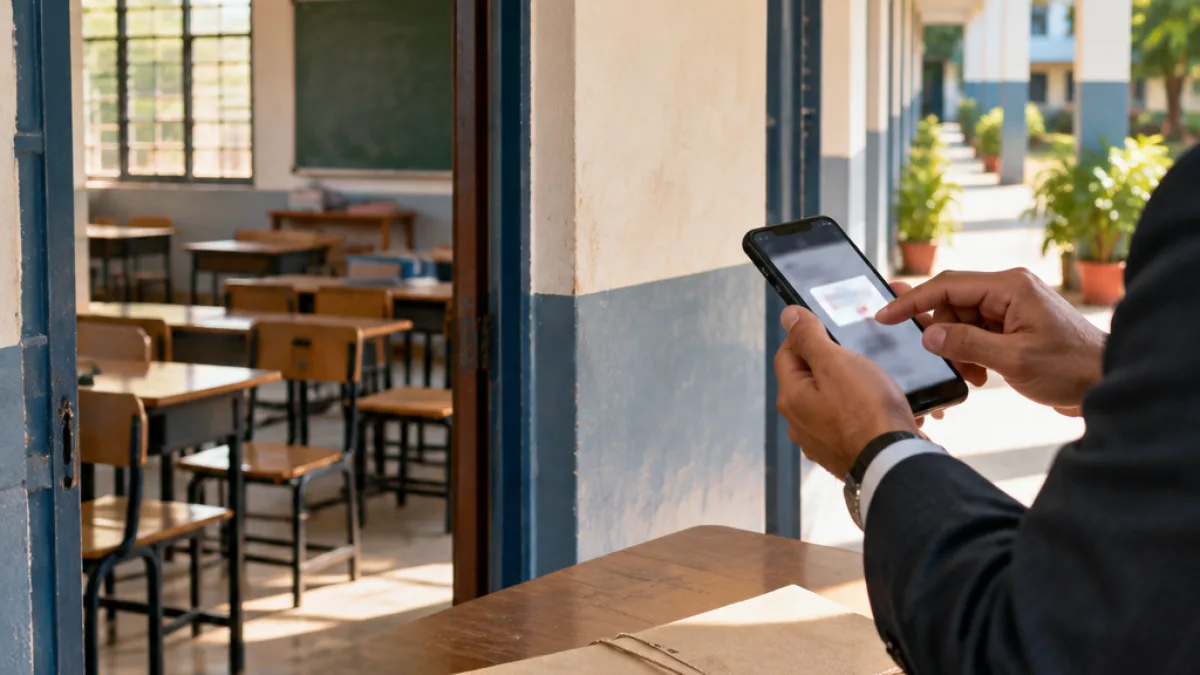
The incident took place on October 28 inside an empty classroom at the government school in Panchkula. According to the case account, the boy allegedly attacked the kindergarten student with a brick and repeatedly struck her on the head. She was also allegedly banged against a bench, pulled by her school tie and kicked before losing consciousness.
The girl suffered multiple injuries and was taken to the Postgraduate Institute of Medical Education and Research (PGIMER), Chandigarh. She remained admitted there until her discharge on Wednesday. Her discharge marks an important medical development, although the case has also raised questions about how children were supervised and how quickly assistance was provided inside the school premises.
State inquiry into circumstances
The Haryana government has constituted a five-member committee to examine the circumstances surrounding the assault. The committee’s inquiry is expected to focus on the sequence of events and the conditions in which the incident occurred, though details of its findings were not available in the material reviewed for this report.
For families whose children attend government schools, the case has a practical significance beyond the immediate legal proceedings. Empty classrooms, movement of students during school hours and the availability of adult supervision are all matters that affect everyday safety. Any assessment of the incident will need to establish the facts without compromising the privacy of either child.
Key developments in the case
- October 28: The alleged assault took place in a government school in Panchkula.
- After the incident: The injured girl was taken to PGIMER, Chandigarh, while the boy was sent to an observation home in Ambala.
- Wednesday: The girl was discharged from PGIMER and the Juvenile Justice Board granted bail to the boy.
- Current administrative action: The Haryana government has formed a five-member committee to examine the circumstances.
| Issue | Position reported |
|---|---|
| Proceeding | Juvenile Justice Board hearing |
| Bail | Granted to the eight-year-old boy |
| Victim’s medical status | Discharged from PGIMER, Chandigarh |
| Government response | Five-member committee constituted |
The Board’s order on social media material also underlines the responsibility of users and platforms when incidents involve children. Sharing images, recordings or identifying details can make it difficult to restore privacy once material has spread. The petition by the girl’s father placed that concern directly before the juvenile justice authorities.
The proceedings will now continue alongside the government’s examination of the school incident. The two children’s circumstances are different but both require safeguards: the injured girl’s privacy, recovery and protection from further distress, and the accused boy’s access to counselling, education and rehabilitation within the juvenile justice framework. The case has consequently brought together questions of school oversight, child welfare, responsible online conduct and institutional accountability in Panchkula.