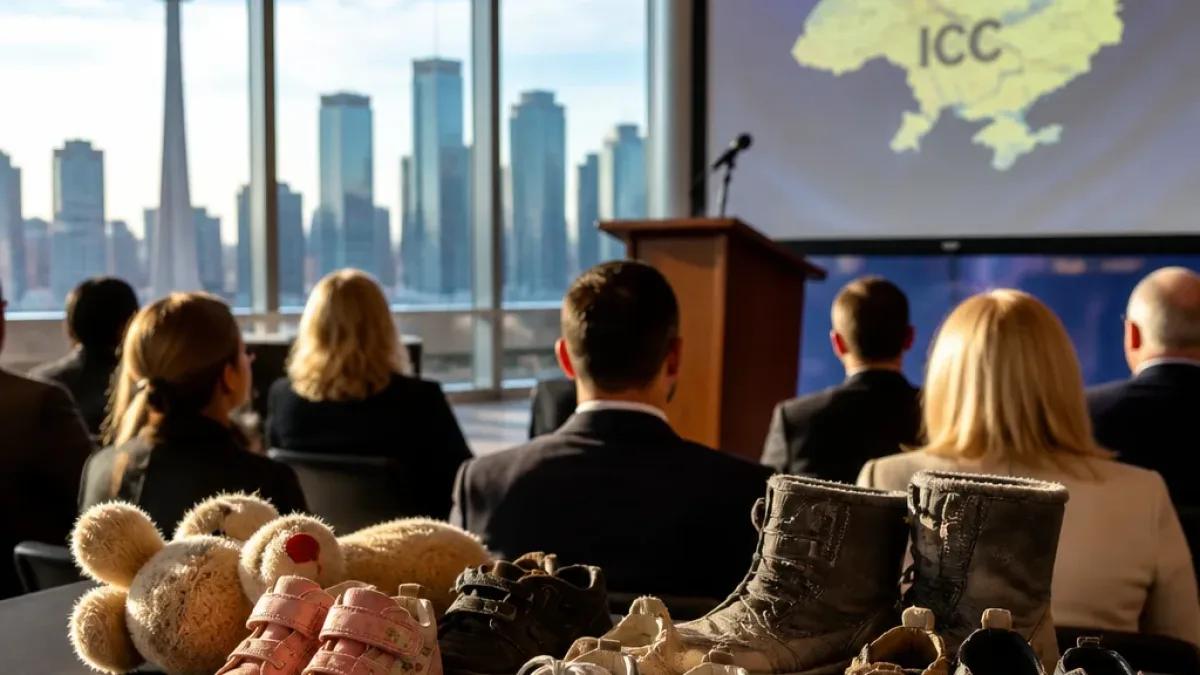
At a Toronto conference addressing pathways to peace, a senior diplomat highlighted the scale and nature of alleged crimes against children in Ukraine — abuses that the International Criminal Court has cited in pursuing judicial action.
Diplomatic appeal in Toronto
Speaking at the Pathways to Peace forum, Zane Dangor, the director general of South Africa’s department of international relations and co-operation, called for the immediate return of children taken from Ukraine and placed an explicit focus on the legal and humanitarian obligations that govern armed conflict.
"In line with international humanitarian law, all civilians, and especially children who have been abducted, deported, captured, or imprisoned, must be returned safely to their families in Ukraine,"
Dangor’s remarks underscored what he described as “crimes against children” — a theme that the International Criminal Court (ICC) referenced when it issued an arrest warrant in 2023. The conference brought those allegations into a Canadian forum, drawing attention from civil society and legal observers.
Documented cases and testimony
The presentation and subsequent reporting cited several documented incidents and witness accounts that illustrate the allegations:
- Volodymyr Rybak, 42 — identified as the first civilian casualty in the Donbas conflict on April 17, 2014, whose death and treatment were circulated publicly and reportedly seen by his daughter.
- Styopa Chubenko, 16 — arrested and allegedly beaten in July 2014 for displaying pro-Ukrainian symbols; his body was reportedly found months later with severe injuries.
- Testimony attributed to Daniil Tulenkov — a former Russian soldier who has described sexual violence in occupied areas, including assaults witnessed by minors.
The conference commentary also cited estimates that more than 20,000 children have been removed from Ukraine, including orphans and children from foster care, a figure that the speaker framed as part of a larger pattern of alleged abuses.
Legal context and implications
The ICC’s 2023 arrest warrant — referenced during the Toronto event — focused attention on the alleged forcible transfer and other abuses affecting children. That warrant remains a significant instrument in international criminal law, signalling prosecutorial interest in alleged patterns of conduct that may amount to crimes against humanity or war crimes.
Canadian legal specialists and human-rights groups have previously urged coordinated international action to investigate and document abuses in Ukraine. The Toronto remarks reinforced calls for the safe return of children and for accountability measures that can support both reparations and deterrence.
Human cost and longer-term consequences
Speakers at the event emphasised the intergenerational harm of such alleged offences: traumatic exposure to violence, forced displacement, and the disruption of family structures. The conference highlighted both individual cases and systemic allegations, stressing that legal remedies are only one component of a broader need for rehabilitation and restoration for survivors.
| Case | Age | Allegation |
|---|---|---|
| Volodymyr Rybak | 42 | Killed after detention and torture; image of body viewed by family members |
| Styopa Chubenko | 16 | Arrested for pro-Ukrainian symbolism; later found dead with severe injuries |
| Daniil Tulenkov (testimony) | — | Described sexual violence in occupied areas, witnessed by minors |
Speakers at the conference urged states and international organisations to prioritise tracing and reunification efforts, documentation of abuses and legal accountability. The Toronto setting brought those international concerns into a Canadian civic context, engaging diplomats, legal experts and human-rights advocates.
The presence of such testimony in a domestic forum reflects the broader role that civil society and governments can play in supporting investigations, sponsoring humanitarian responses and applying diplomatic pressure to secure the return of vulnerable children.
As international prosecutors continue to assess evidence and pursue cases, the human-rights claims presented in Toronto will remain central to debates about justice, reparations and the protection of civilians in armed conflict.