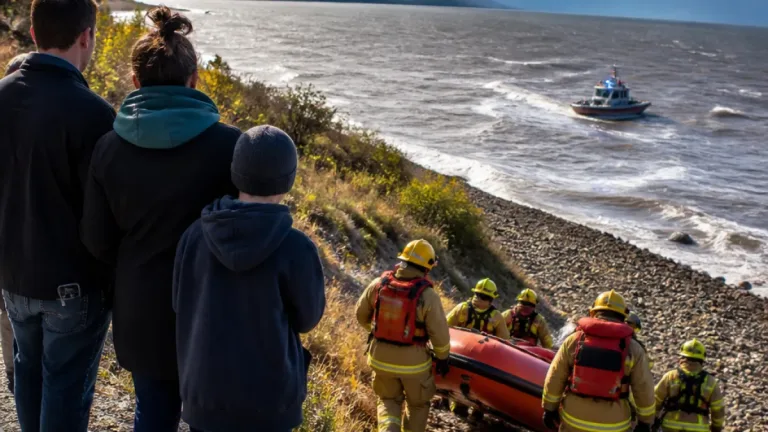
David Tennant leads Channel 4’s four‑part drama Deadwater Fell, a tightly wound examination of a small community’s response when a suburban family is almost entirely wiped out in a house fire and the lone survivor becomes the focus of suspicion.
What happened on screen
The series, created by Daisy Coulam and first broadcast in 2020, opens in the seemingly ordinary village of Kirkdarroch where Tom Kendrick (Tennant), a local general practitioner, appears to live an enviable family life. On the night that sets the plot in motion, smoke and flames consume Tom’s house. His wife, Kate (Anna Madeley), and their three daughters die; Tom is rushed to hospital and survives.
As first responders and investigators piece events together, it becomes clear that the deaths were not a random accident. The circumstances prompt a criminal inquiry and the community — once close‑knit — turns inward as neighbours and friends begin to question what they believed they knew about their neighbours’ domestic life.
Cast and structure
Alongside Tennant and Madeley, the principal cast includes Cush Jumbo as Jess, a friend and fellow primary school teacher, and Matthew McNulty as a local detective sergeant with family ties to the victims’ circle. The entire story unfolds across four episodes, allowing the drama to alternate between forensic detail and intimate portrayals of grief, suspicion and interpersonal history.
- Format: Four episodes
- First broadcast: 2020 on Channel 4
- Key cast: David Tennant, Anna Madeley, Cush Jumbo, Matthew McNulty
Those elements place the series in the tradition of compact British crime dramas that focus less on procedural breadth and more on the social fallout of violent crime.
Themes and perspective
Deadwater Fell fixes on the aftermath of an intimate tragedy: the victims are a mother and three young children, and much of the drama is spent on how that loss reshapes the social fabric of a village. It also interrogates the experience of being the only survivor when others close to you have been killed — and the consequences of becoming a suspect in such circumstances.
"Tom is the only survivor and soon becomes the prime suspect."
Through interviews, domestic flashbacks and the slow revealing of inconsistencies in relationships, the series probes questions that resonate beyond television: how communities interpret evidence, the speed with which suspicion can replace solidarity, and the psychological toll on both families and investigators.
Why it matters to crime readers
While a fictional series, Deadwater Fell intersects with real‑world concerns that national crime readers follow closely. The programme frames issues around investigative process, the role of community testimony, and how media and neighbours can shape a suspect’s public perception long before a court determines culpability. It also centres victims’ stories — four deaths that leave ripples through family and friendship networks — which is a frequent lens in reporting on homicide and domestic tragedy.
| Aspect | Detail |
|---|---|
| Episodes | 4 |
| Original network | Channel 4 |
| Year | 2020 |
For readers accustomed to longer procedural series, Deadwater Fell’s compressed arc offers a concentrated study of suspicion, grief and the slow unravelling of a family’s private life when placed under forensic and communal scrutiny. The series may be of particular interest to those who follow criminal investigations and the societal reactions that often accompany high‑profile deaths.
Available to stream where Channel 4’s programming is carried, the drama has been described by viewers and reviewers as an emotionally intense, character‑driven take on the small‑town murder story.