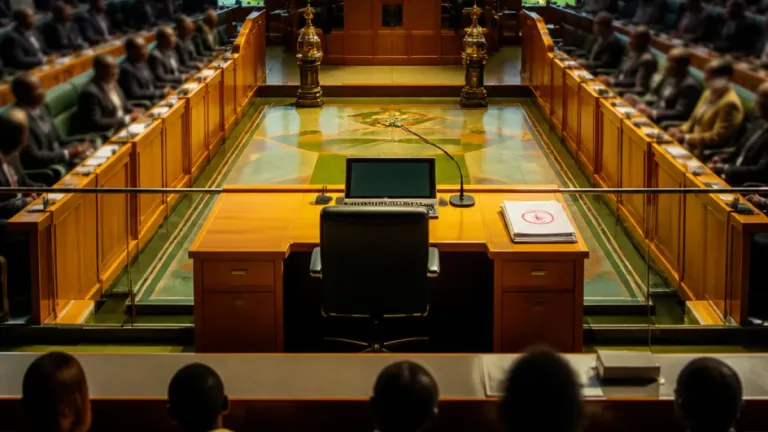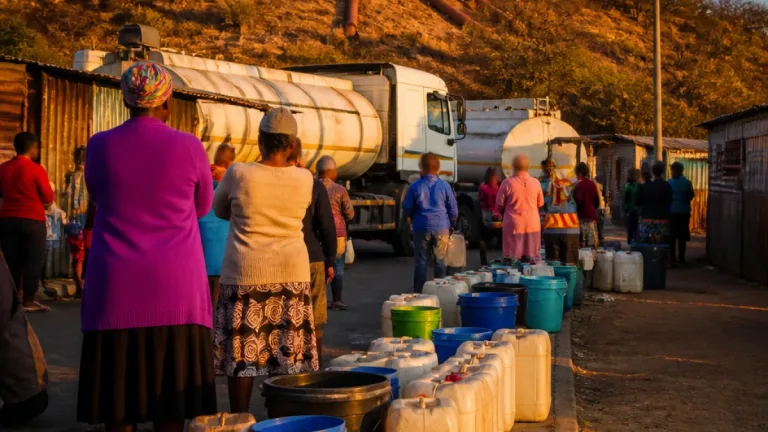

Giyani residents were given a stark reminder of the local stakes ahead of the 4 November local government elections during a political debate hosted by SABC’s MLFM at the Greater Giyani Municipality’s new council chamber on Friday evening. Opposition parties used brief speaking slots to criticise the ANC’s record on service delivery, focusing on the municipality’s ongoing water crisis and deteriorating road infrastructure.
Water shortages blamed on management, not lack of resource
Representatives from smaller parties told the audience that Giyani’s water problems are the result of poor management and corruption rather than an absolute shortage of water. Soyaphi Robert Nkuna, representing the Build One South Africa (BOSA) party, said the crisis was avoidable and linked it to weak oversight in the ANC-led municipality.
“It is not like we have a water crisis in Giyani. The crisis was caused by a lack of competent managers and corruption in the ANC-led government,”
Nkuna also singled out the partially tarred 29km Thomo-to-Hlomela road, alleging that work had stalled because tenders were awarded to unqualified contractors. He accused the ruling party of awarding contracts to benefit insiders rather than ensuring delivery.
Other parties point to untapped local resources
Dimpho Hlungwani, speaking for Ximoko — a party with roots in the former Gazankulu homeland administration — argued that Giyani has water sources that are not being developed. He said there are dams and streams available which could be prepared to supplement supply, but that municipal inaction has wasted this potential.
The debate also saw ActionSA commit to institutional measures. Ponani Makhubele told attendees the party would establish a panel to investigate allegations of water-related corruption in Giyani if ActionSA were to take control of the municipality.
Promises, probes and the immediate concerns of households
The event offered a compressed view of competing electoral messages: opposition parties promising rapid correction or investigation of perceived failures, and criticism aimed directly at the incumbent party responsible for governing Giyani. For many residents, the questions raised are intensely practical — will taps run, will roads be safe and passable, and will municipal spending be transparent?
- Water supply — Opposition speakers argued the crisis stems from corruption and mismanagement; Ximoko said local water sources remain underused.
- Roads — The 29km Thomo-to-Hlomela tar project was highlighted as emblematic of stalled infrastructure delivery.
- Accountability — ActionSA pledged a dedicated panel to probe water-related corruption if elected.
Those concerns line up with everyday pressures facing households across Greater Giyani. Interruptions in water supply affect domestic chores, sanitation and small-scale agriculture where subsistence gardeners rely on predictable water access. Poor road surfaces increase vehicle wear, raise transport costs and limit access for emergency services and markets.
| Party | Representative | Key point made at debate |
|---|---|---|
| BOSA | Soyaphi Robert Nkuna | Blamed management and corruption for the water crisis; criticised tendering on Thomo-to-Hlomela road. |
| Ximoko | Dimpho Hlungwani | Argued Giyani has dams and streams that could be developed to improve supply. |
| ActionSA | Ponani Makhubele | Promised to establish a panel to investigate water-related corruption. |
Notably absent from available reports of the debate was a detailed rebuttal by ANC speakers on the specific allegations or a clear corrective plan they would present to voters. The format of the event — with each party given under two minutes to outline its offering — left limited space for extended policy explanation or cross-examination of claims.
As election day approaches, these themes are likely to form the backbone of campaigning in Greater Giyani: whether the ANC can defend its record on basic services and whether opposition promises of probes and rapid fixes will convince voters who have lived with persistent interruptions to water and longstanding road problems.
For residents, the debate underscored an immediate choice: continuity under the current administration or a change premised on repair, oversight and use of local resources. Whichever path voters choose will determine not only political control of the municipality but the speed and direction of responses to the everyday infrastructure challenges that shape livelihoods in Giyani.