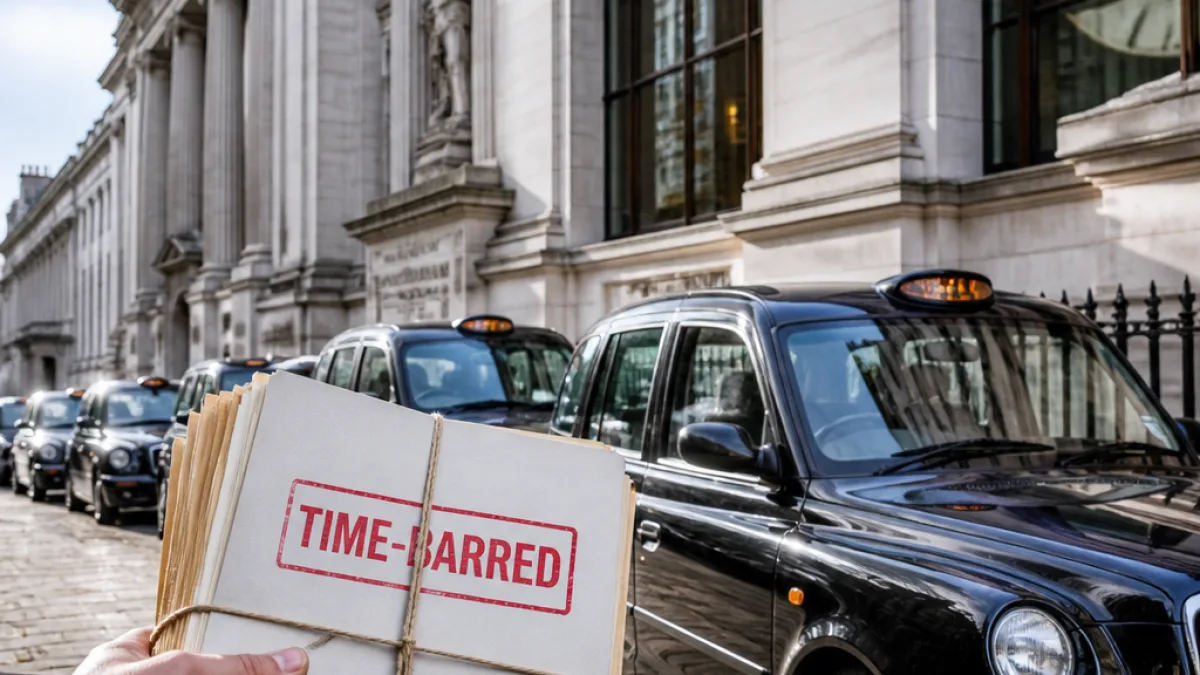
The High Court has dismissed a collective legal action by around 13,000 London black cab drivers that had sought up to £340m in damages from Uber, ruling that the claims were time‑barred under the six‑year limitation period.
Legal time limits determine outcome
The dispute, brought in 2024 by thousands of licensed taxi drivers alongside two former private hire operators, accused Uber of providing “misleading and inaccurate information” to Transport for London (TfL) when applying for and renewing its operating licence. The claimants argued this conduct had harmed rival drivers by depriving them of earnings over several years.
Rather than reaching a determination on the substance of the allegations, the High Court found that the claimants had waited too long to pursue the action and that the relevant events fell outside the six‑year civil limitation period for such claims. At a preliminary hearing in June, Uber contended that sufficient information was publicly available years earlier for drivers or their representatives to investigate and bring proceedings sooner.
Company response and context
Uber welcomed the ruling, saying it removed longstanding legal uncertainty. In a statement provided to media, the company emphasised its position and longstanding co‑operation with drivers.
“Uber is proud to work with thousands of Private Hire and black cab drivers to serve millions of passengers across London. We are pleased that the court has dismissed all of these claims entirely at the earliest opportunity and the ruling today has put these legacy matters firmly in the past.”
The business has been the subject of multiple regulatory and legal challenges in the capital since TfL first refused to renew its licence in 2017, prompting a series of appeals and requirements for changes to its operational and safety practices. Uber has consistently denied unlawful behaviour and maintained it holds a valid licence to operate in London.
What the judgement means for drivers and the market
For thousands of black cab drivers who supported the claim, the ruling will be a significant disappointment. The claim sought compensation for alleged lost earnings resulting from Uber’s market presence and the way it obtained regulatory permission to operate.
From a market perspective, the decision removes a potential £340m liability from Uber’s balance sheet and may reduce the immediate legal risk to the company in the UK. But it does not preclude other legal or regulatory challenges, nor does it settle underlying questions about competition between traditional taxis and ride‑hail services in London.
Key facts at a glance
- Claimants: approximately 13,000 London black cab drivers and two former private hire operators (Kabbee and Iride).
- Allegation: Uber allegedly provided misleading or inaccurate information to TfL when obtaining its licence, causing lost earnings for rival drivers.
- Damages sought: up to £340m.
- Court decision: claims dismissed as time‑barred under the six‑year limitation period.
| Element | Detail |
|---|---|
| Claimants | ~13,000 black cab drivers; Kabbee and Iride |
| Amount sought | £340m |
| Legal basis for dismissal | Claims outside the six‑year limitation period |
Broader implications and next steps
Legal observers will note this ruling was procedural rather than substantive. A decision focusing on limitation periods leaves unresolved the core factual questions the claim sought to address — notably whether Uber provided inaccurate information to TfL and whether that conduct, if proven, led directly to quantifiable losses for rival drivers.
For the taxi trade, the judgment underscores the importance of prompt legal action where alleged regulatory breaches are concerned. Lawyers for the claimants had reportedly been exploring the possibility of a class action for some years; the court accepted Uber’s argument that interest and public reporting around its licensing difficulties from 2017 onwards meant claimants should have acted earlier.
Policy makers and regulators may also take an interest in the case’s trajectory. The dynamic between legacy taxi services, app‑based private hire operators and regulatory oversight remains politically sensitive in London, touching on consumer safety, emissions and earnings for drivers.
While this chapter concludes with the dismissal of the claims, the underlying tensions in London’s taxi market persist and could prompt further litigation, regulatory scrutiny or political debate in the months ahead.