GANGTOK: Union Minister for Fisheries, Animal Husbandry and Dairying Rajiv Ranjan Singh inaugurated a Microbiology Laboratory of the Sikkim Milk Union (SMU) at a programme in Gangtok, marking a fresh focus on testing, quality assessment and organised dairy infrastructure in the state.
The programme, held on November 3, also featured the launch of a Churpi Traceability initiative and Fodder Plus products developed by Farmer Producer Organisations (FPOs). The measures are linked to different parts of the dairy chain, from the assessment of milk quality and food safety to the identity of traditional products and the availability of fodder for livestock.
Laboratory to strengthen dairy testing
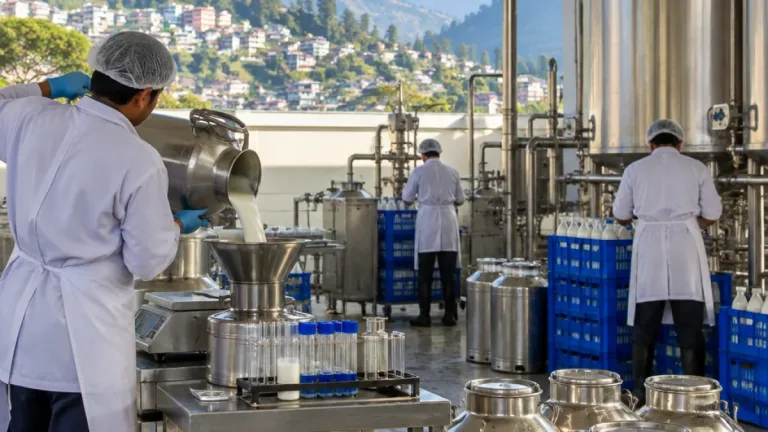
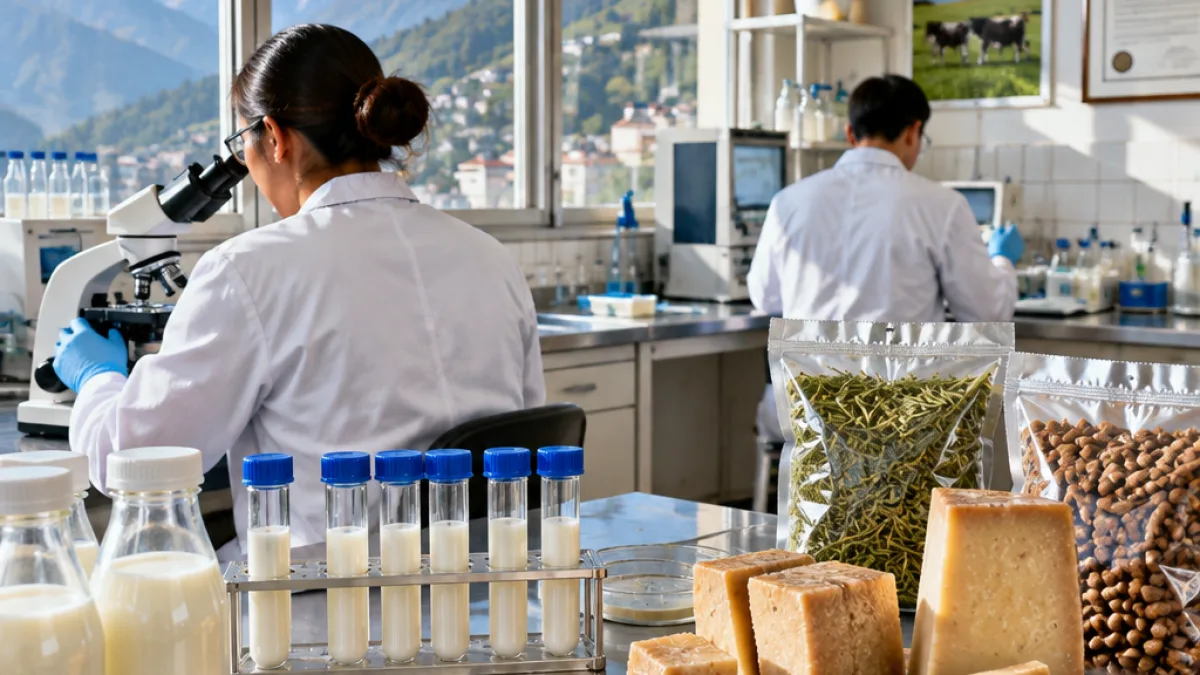
The laboratory was established under the National Programme for Dairy Development (NPDD). Its stated purpose is to strengthen microbiological testing and quality assessment, thereby supporting quality assurance and food safety in the dairy sector. A separate Microbiology Laboratory at Karfectar was also inaugurated virtually during the event.
For consumers in Gangtok and elsewhere in Sikkim, the new testing capacity places greater emphasis on the systems used to assess dairy products. The programme also included an inspection of exhibition stalls displaying dairy products and other initiatives of the Milk Union. The available information does not specify the laboratory’s testing capacity or the range of products to be examined.
Cooperatives and value addition
The Churpi Traceability initiative is intended to improve the traceability of the traditional dairy product and strengthen its identity and marketability. Churpi is being addressed here as part of a wider value-addition effort in the dairy sector, alongside products developed through farmer collectives.
The Fodder Plus launch highlighted the role of fodder availability in livestock production and the potential for FPOs to create diversified income opportunities. The programme also saw registration certificates handed to five newly established Dairy Cooperative Societies. Their registration represents an expansion of organised dairy institutions at the grassroots level, according to the programme details.
- Microbiology laboratory: Inaugurated under the NPDD to support testing and quality assessment.
- Churpi: A traceability initiative was launched to promote product identity and marketability.
- Fodder Plus: FPO-developed products were introduced, with emphasis on fodder and diversified livestock-sector income.
- Cooperatives: Registration certificates were distributed to five new Dairy Cooperative Societies.
Milk production and supply figures
Addressing the gathering, Singh congratulated the Sikkim Government and other stakeholders on progress in the dairy sector. He cited a 79 per cent increase in milk production over the past decade, from 1.37 lakh litres to 2.45 lakh litres per day.
| Indicator | Earlier figure | Latest figure cited |
|---|---|---|
| Daily milk production | 1.37 lakh litres | 2.45 lakh litres |
| Dairy cooperative societies | 389 in 2014–15 | 733 in 2025–26 |
| Daily consumer supply | 28,000 litres | 56,000 litres |
The Union Minister also cited an 88 per cent rise in the number of dairy cooperative societies, from 389 in 2014–15 to 733 in 2025–26. Daily milk supply to consumers, he said, had doubled from 28,000 litres to 56,000 litres. The figures place the Gangtok programme within a broader effort to connect production, testing, cooperative organisation and consumer supply across Sikkim.
With the new laboratory, traceability initiative and cooperative registrations announced together, the programme brought food-safety infrastructure and producer-linked development into the same policy frame. The next significance for the state’s dairy network will depend on how these facilities and initiatives are used across the system, while the reported production and supply figures indicate the scale at which that network is already operating.