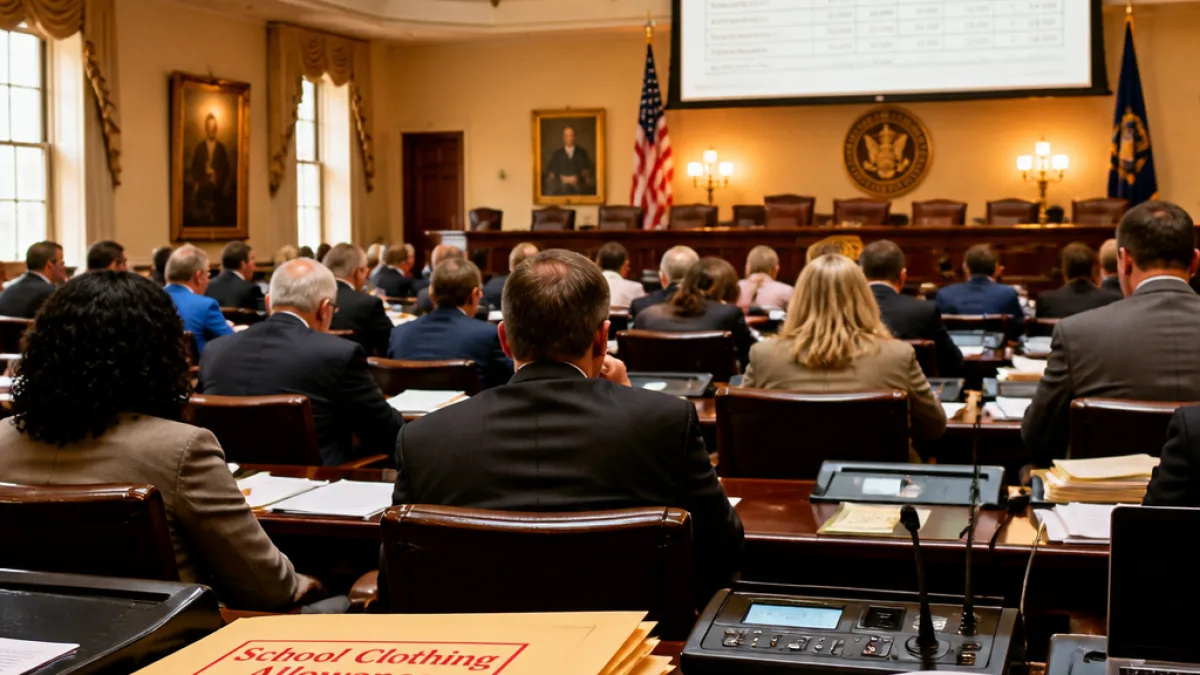
Little Rock — Arkansas farmers packed a joint energy committee meeting Monday to plead with lawmakers for relief, saying a recent state law that allows utilities to recover construction costs during building has produced steep, unexpected bills that could force some producers out of business.
Farmers describe steep bill increases
Several farmers told committee members that the new charges arriving on their summer statements have been dramatic. One producer said the law added roughly $25,000 to his energy costs over the past three months; another told legislators his operation saw an increase of about $12,000 and warned he may not survive additional hits.
"It's about $12,000, and our bottom dollar went three years ago. We don't have any more dollars to spend," a farmer said during testimony.
Growers said rising input costs and depressed commodity prices already squeeze margins, and the new utility charges are coming on top of those pressures. "We may not be in business for five years. We may not be in business next year," one witness told the panel.
What the Generating Arkansas Jobs Act does
Lawmakers and utility representatives described the Generating Arkansas Jobs Act as a mechanism that allows power companies to begin charging customers for large capital projects — such as new power plants — as the projects are being built, rather than waiting until construction is finished and costs are placed into rates in a single, larger increase.
Entergy and other proponents contend the approach smooths the transition for ratepayers by spreading costs over the construction period; opponents warn it shifts risk and expense to high-volume customers now.
Lawmakers acknowledge flaws
Sen. Jimmy Hickey, who opposed the law when it was debated, told farmers he and other lawmakers missed important guardrails when the measure was adopted. Hickey apologized during the hearing and urged those affected to continue sharing testimony to guide possible legislative fixes.
"We just missed the part that they might just put that in their pocket instead of putting that on the cost of construction. So, we made some mistakes. I made some mistakes, and I want to apologize to you all for," Hickey said.
Utility testimony and arguments
Representatives for Entergy defended the intent of the law, saying it was designed to avoid large, lump-sum rate increases once new generation comes online. Utility officials argued the mechanism prevents sudden, steep hikes by recovering costs gradually as construction progresses.
However, several high-volume customers — including farmers who operate grain dryers, irrigation systems and livestock facilities — said the incremental charges hit them sooner and harder than expected, complicating cash-flow planning during already tight seasons.
Local impact and next steps
Arkansas agriculture is the state's largest industry by many measures, and witnesses at the hearing framed the issue in those terms, urging lawmakers to consider protections or exemptions for farm operations that face unique seasonal and volume-related energy demands.
- Farmers requested lawmakers weigh the tax and fee burden on agriculture compared with other industries.
- Some urged the legislature to add safeguards so construction-related charges cannot be used in ways that increase customers' near-term bills unexpectedly.
- Senators invited continued testimony as they consider revisions or clarifications to the law.
Committee members did not announce immediate legislative changes Monday. Lawmakers face a choice between amending the statute to add consumer protections, seeking regulatory solutions through the Public Service Commission, or leaving the law intact while monitoring its effects.
| Claimed short-term bill impacts | Reported examples |
|---|---|
| Three-month increase | $25,000 |
| Single-farm increase | $12,000 |
What producers say they need
Farmers who testified called on legislators to consider targeted relief for agricultural customers, clearer limits on what utilities may collect during construction, and greater transparency in how project costs are allocated. They stressed that many farms operate on thin margins and have less flexibility than other commercial customers to absorb sudden energy cost increases.
The hearing underscored a broader tension in energy policy: balancing the need to invest in new generation capacity with the short-term financial realities faced by customers who use large amounts of electricity. Lawmakers signaled they heard the testimony and will weigh next steps as the practical effects of the Generating Arkansas Jobs Act play out across the state.
Reporting from the capitol will continue as legislators and stakeholders seek solutions that protect Arkansas' agricultural backbone while advancing the state's energy infrastructure goals.