A Goa college is turning the spotlight from wedding preparations to the less visible work of building a marriage, with a new certificate programme designed to help young adults examine relationships, commitment and the responsibilities of family life.
The 15-day course, titled “Marriage Readiness: Preparing for Healthy and Lasting Relationships”, will be conducted from December 2 to 17, 2026 by the Department of Human Development and Family Studies at Goa College of Home Science. It is open to undergraduate and postgraduate students, unmarried young adults and others interested in developing healthier relationships.
The initiative comes at a time when the Goa government has indicated that it wants to introduce pre-marriage counselling across the state. Chief Minister Pramod Sawant made the announcement at an event in Panaji on Sunday, linking the proposed counselling framework to the need to reduce divorces.
State Law Department figures cited in the report show that Goa’s civil courts received more than 3,000 petitions connected with marriage and divorce between 2022 and 2025. The annual total reached 947 petitions in 2024, underscoring the scale of disputes and family-related litigation even though the figures do not by themselves explain the circumstances behind each case.
Beyond the wedding day
Mahesh Pai, principal of Goa College of Home Science, said the programme would approach marriage as a long-term relationship rather than as an event centred on ceremonies and celebrations. The course is intended to encourage participants to consider their own personalities, their expectations of a partner and the obligations that accompany married life.
“It requires an understanding of oneself, one’s partner, relationships, commitment and the responsibilities of married life,” Pai said.
That emphasis gives the course a distinctive place in Goa’s current conversation on family wellbeing. Marriage preparation is often associated with arrangements for a wedding, including rituals, hospitality and finances. The college’s programme instead places attention on emotional preparedness, interpersonal understanding and the practical responsibilities that continue after the celebrations are over.
The brochure frames the question in deliberately broad terms: people commonly spend close to two decades preparing for a career, but may spend far less time preparing for marriage or family life. The course uses that contrast to invite participants to think about whether education and discussion should also precede one of the most consequential personal commitments many adults make.
What the programme will cover
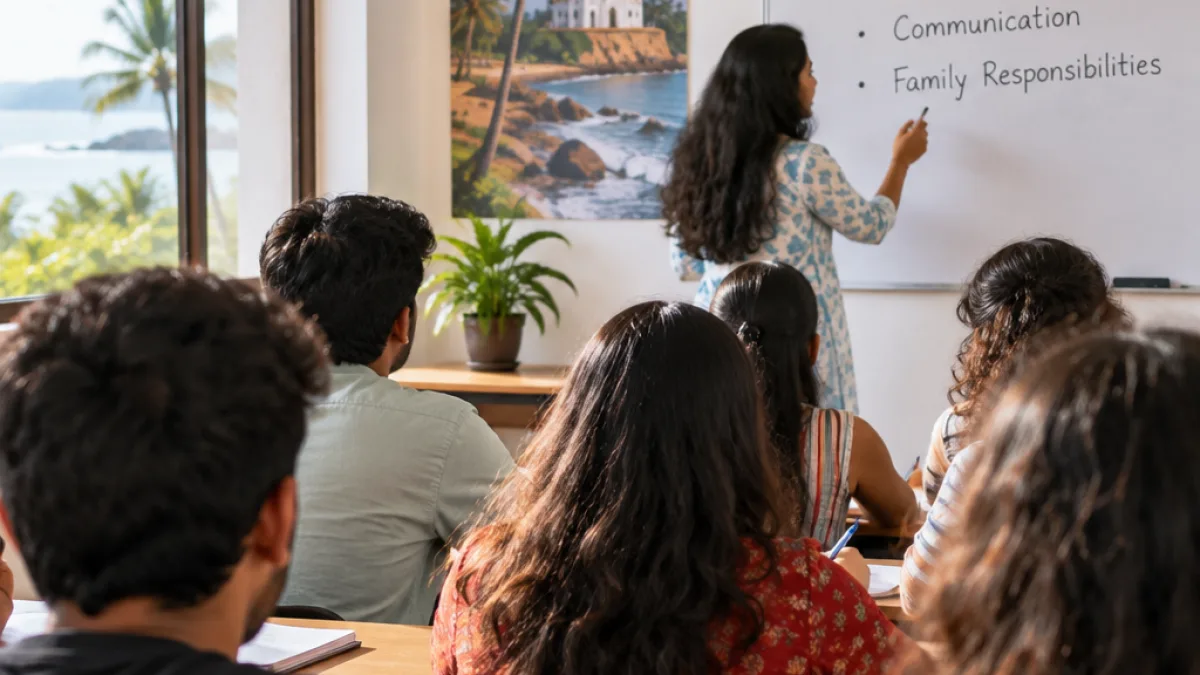
The announced sessions are structured around the formation and maintenance of relationships. Among the themes listed by the college are dating and its purpose, self-awareness, the human need to belong, and the ways ideas about masculinity and femininity can shape relationships.
- Dating: examining its purpose and dynamics;
- Self-awareness: understanding personal identity and the need for belonging;
- Gender roles: exploring masculinity and femininity and their influence on relationships;
- Marriage preparation: considering commitment and the responsibilities of married life.
The listed subjects suggest that the course will address relationships before and after marriage, rather than treating readiness as a single decision made immediately before a wedding. It also places individual reflection alongside the question of how partners understand one another and negotiate shared responsibilities.
Course details at a glance
| Detail | Information |
|---|---|
| Programme | Marriage Readiness: Preparing for Healthy and Lasting Relationships |
| Organiser | Department of Human Development and Family Studies, Goa College of Home Science |
| Duration | 15 days |
| Dates | December 2-17, 2026 |
| Eligibility | Undergraduate and postgraduate students, unmarried young adults and other interested participants |
For students and young adults in Goa, the format provides a structured setting in which questions about partnership can be discussed before they become sources of conflict. The college has not described the course as a guarantee against marital difficulties. Instead, its stated purpose is to help participants develop a clearer understanding of the personal and shared work involved in sustaining a relationship.
The programme also arrives as the state considers a larger counselling mechanism. If implemented, the proposed government initiative would place relationship preparation within a wider public conversation about marriage, family responsibilities and the pressures that can lead couples to court. For now, the college course is a focused educational intervention, with participation open to people at different stages of their personal and academic lives.
In Goa, where marriage is closely woven into family, community and cultural life, the initiative shifts attention to what happens away from the public rituals: how people communicate, what they expect from one another and whether they are prepared for the commitments they are about to undertake. Registration details beyond the eligibility information and dates were not provided in the material announcing the course.